Teaching
3D development
My experience teaching includes mentorship at nonprofits, presenting at conferences, working as a student assistant at UC Berkeley, and teaching as an Adjunct Assistant Professor at USC Games.
Below are some courses I have taught outside of conferences:
| Organization | Course | Role |
|---|---|---|
| USC Games | Game Development: Unity Engine, Unreal Engine, C# Programming | Adjunct Assistant Professor |
| Fulbright | Unity Engine, Raspberry Pi Pico, Mixamo Animation | Fulbright Specialist |
| Berkeley DATA-X | Data, AI, and Information Technology Systems | Research Assistant |
| Berkeley CS61A | Data Structures: Python, SQL, and Scheme | Lab Assistant |
| Glowy Lab | AR/VR, Game Development, UI/UX Design | Founder of Nonprofit |
| Best Buddies CA | Scratch, Adobe Premiere Pro, Adobe Illustrator, Procreate | Volunteer Mentor |
University of Southern California
CTIN 583 is a required 2-unit course for graduate students pursuing a Master of Science in Game Design and Development. In this class, students are introduced to Unity and Unreal game engines, with many entering the course with little to no prior programming experience. I structure the course in a lecture-lab format with interactive activities including Unity C# scripting lab assignments, visualizing data structures in the Unity Editor, whiteboarding mathematical concepts, and campus scavenger hunts to reinforce game design principles in a fun and engaging way.
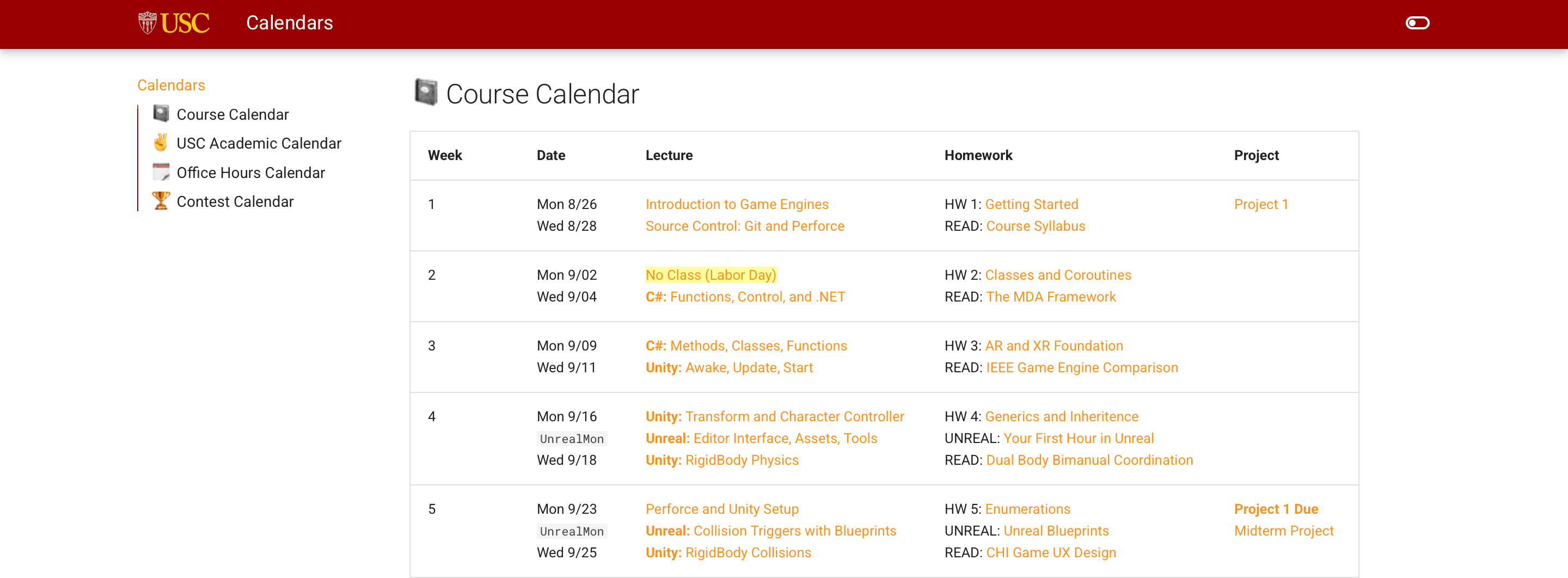
Lectures
While the class is mostly based in Unity, we cover mini topics in Unreal Engine once a week (Unreal Mondays). Lectures take up the first hour of class and cover core concepts in Unity and Unreal Engine. Labs take up the last half of the class in which I build out a feature in our Unity game with the class.
Labs
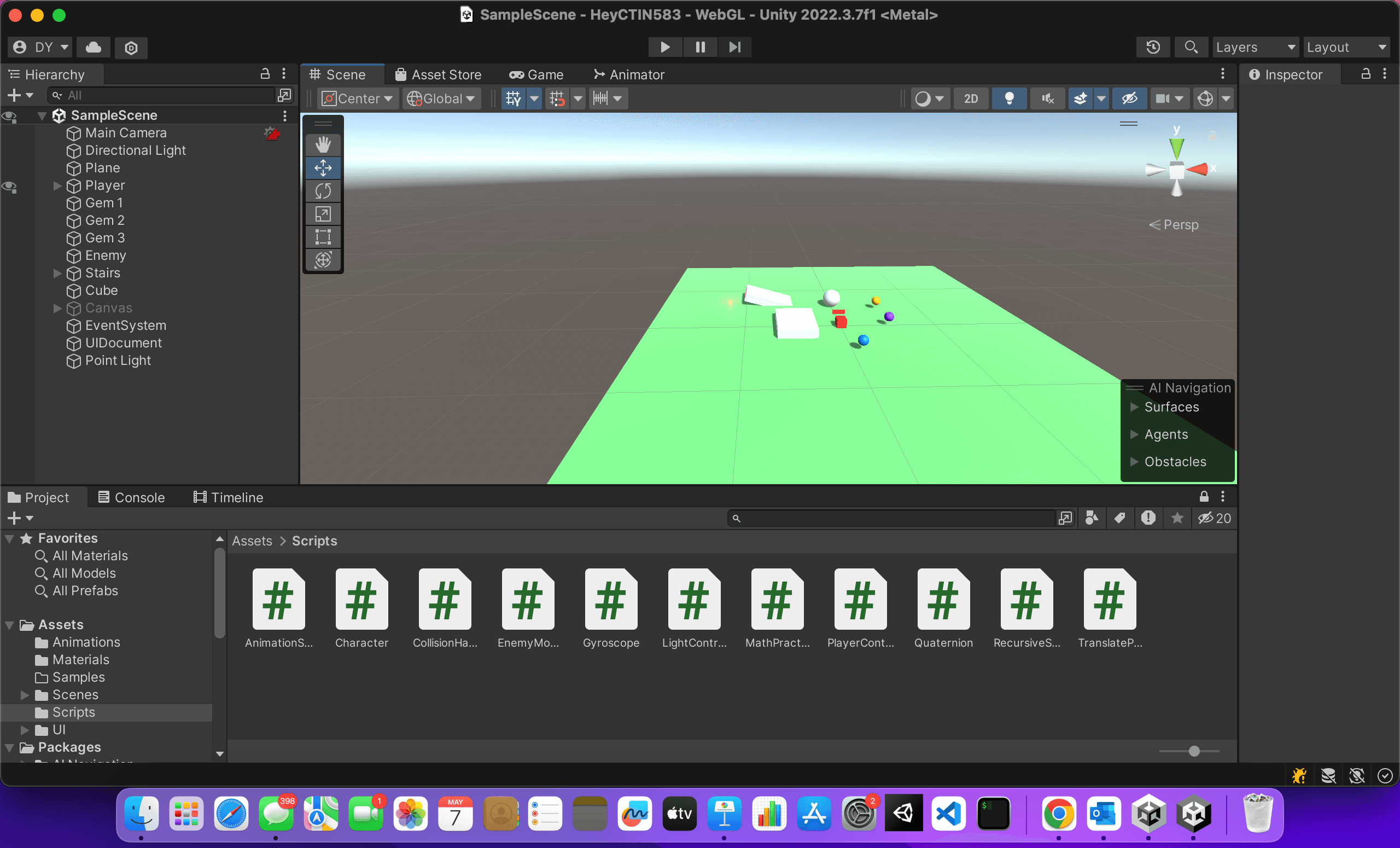 Labs take place during the last hour of class and typically involve a programming task that I live-code in front of the students. They are expected to follow along and complete the lab assignment by the end of class.
Through these lab assignments, students progressively build a game in both Unity and Unreal Engine. In Unity, they create a complete open-world game, while in Unreal, they develop a project that features a boss fight and VFX effects. These projects not only reinforce technical concepts but also serve as portfolio pieces that showcase their growth and creativity throughout the semester.
Homework
Students were assigned weekly homework that focused on C# programming and core concepts such as data structures and game math (including quaternions and Euler angles). The homework was designed to help students practice programming alongside their work in the Unity Engine, while also encouraging them to explore specialized areas such as Narrative Design, Level Design, AI/ML, Shaders, and VFX.
Example Homework Assignments
All homework assignments and grading is found at the following GitHub repository: https://github.com/debbieyuen/ctin583-hw
Projects
Students worked on a total of 6 projects.
- Unity Open-World Game (Lecture-Lab, Partial Project)
- Unreal Starter Project (Unreal Mondays, Partial Project)
- Project 1 (Kitchen Chaos, Full Tutorial Project)
- Midterm Project (Advocacy, Full Project)
- Trick or Treat Activity (Woody x Pong, Partial Project)
- Final Project (Outside the Box, Full Project)
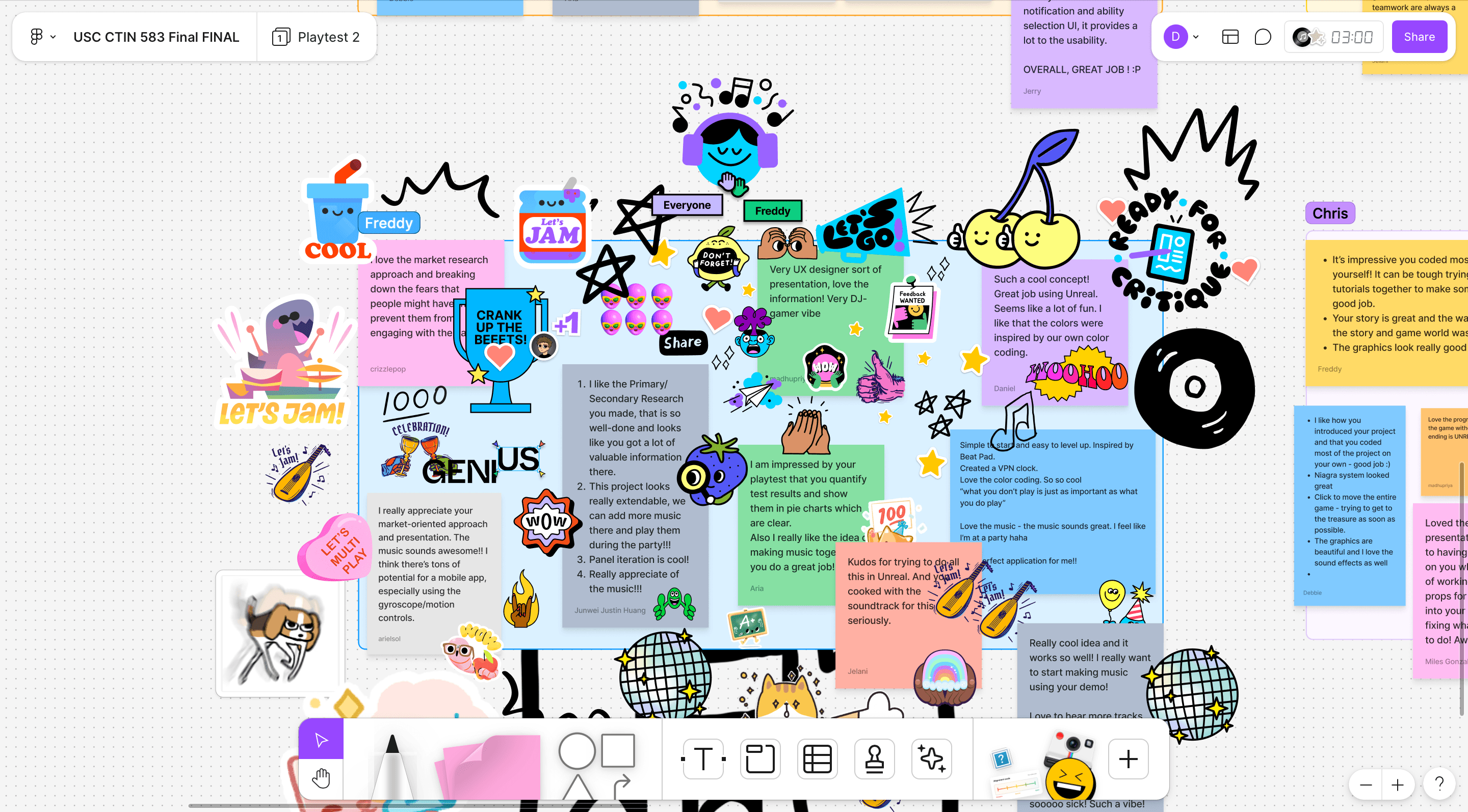
Grading for Project 1 took place as an in-person written and verbal exam. For the Midterm and Final projects, we hosted playtests during the semester. Students gave each other feedback via a Figma. In the screenshot below, students had decorated the presenter's section with stickers.